Guide
Choosing siding for Chesapeake's climate
Chesapeake siding has to cope with coastal storms, long humid summers, heavy rain and shaded, damp lots near water. Here is how the common materials hold up.
Wind
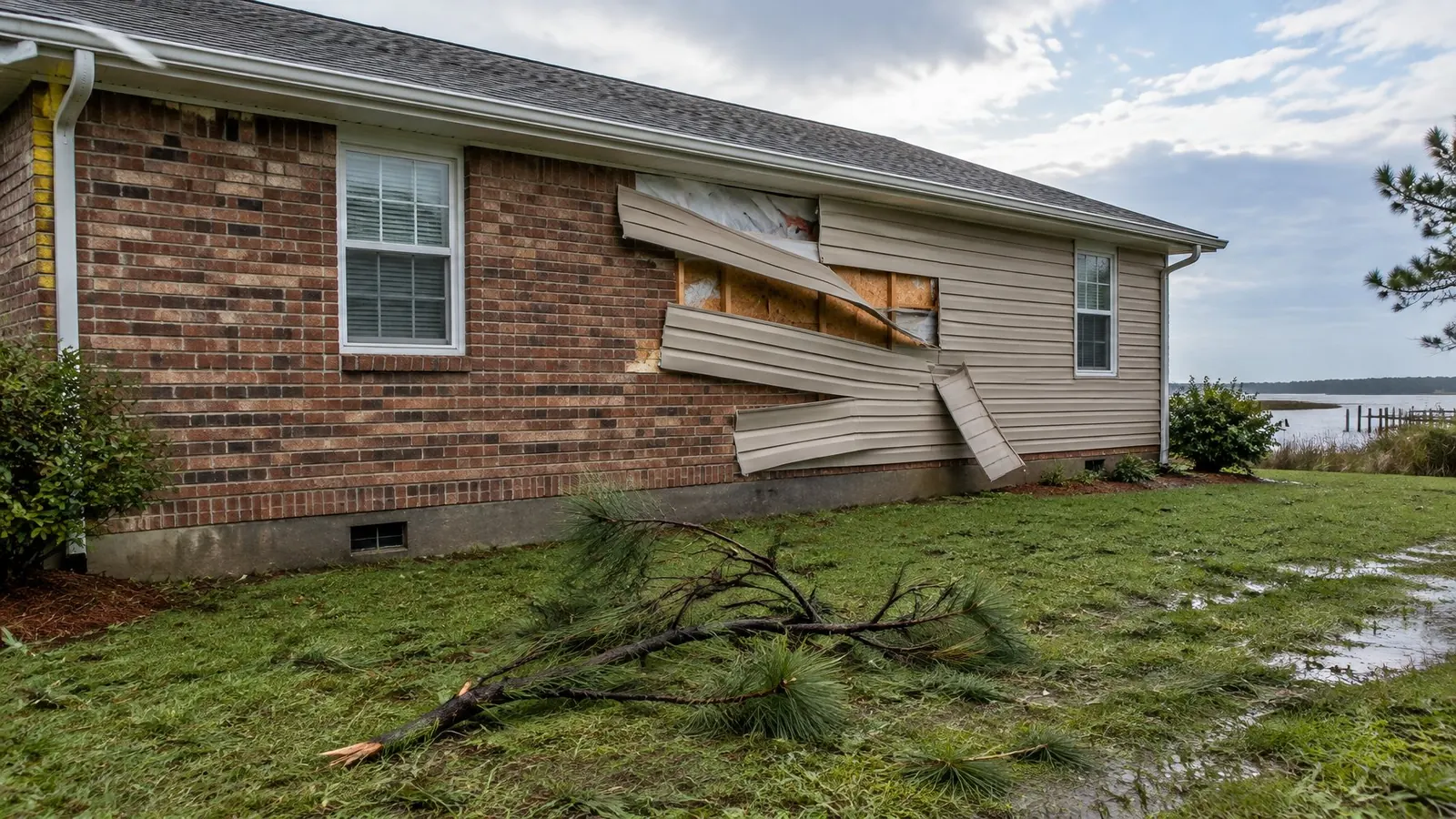
Eastern Virginia's hurricane record, kept by the National Weather Service office in Wakefield, includes Isabel in 2003 (gusts to 75 mph at Norfolk Naval Air Station) and Matthew in 2016 (gusts of 70 to 75 mph across parts of the region, and considerable flooding in Chesapeake). The same record says hurricane-force winds come close roughly three times every 20 years.
For siding, wind resistance is mostly about installation: fasteners into framing at the right spacing, panels fully locked, and trim fixed so wind cannot get behind it. Heavier boards (fiber cement, engineered wood) do not flutter the way thin vinyl can; vinyl makers publish wind-load ratings for their panels, so ask what yours are rated for.
Sources: NWS Wakefield, The Hurricane History of Central and Eastern Virginia (PDF).
Rain, humidity and mildew
Long humid summers and shaded walls grow mildew and algae on any siding. Vinyl and factory-finished fiber cement wash clean; wood and engineered wood need their paint or stain kept up so water does not get in at cut ends.
The bigger risk is water behind the siding. Wrap lapped correctly, flashing at every opening and gutters that carry water away matter more than which cladding you pick.
Low lots and flooding
Parts of Chesapeake are low and close to water. Siding should end above grade by the maker's clearance, and the bottom courses are where flood-wetted sheathing shows up first. The state building code lets the building official require a permit for exempt work, including siding, in a special flood hazard area, so ask before re-siding a house in one.
Heat and sun
Vinyl expands in heat, which is why it is hung loosely. Dark vinyl colors get hotter, so check the maker's guidance. Fiber cement and engineered wood stay put but their paint fades with sun like any painted wall.
The materials side by side
Any of them can do well in Chesapeake if it is installed to the maker's instructions over a sound, dry wall.
- Vinyl: light, quick to hang, washes clean; can crack when cold and brittle, can loosen in wind if poorly fastened.
- Fiber cement: heavy, does not burn or rot, takes paint well; needs careful cutting and periodic repainting.
- Engineered wood: lighter than fiber cement, long boards; must be kept off the ground with all edges sealed.
- Wood clapboard and cedar: traditional, repairable board by board; needs paint or stain and good drainage.
- Insulated vinyl: stiffer and flatter than plain vinyl; the backer adds some insulation.
Siding cracked, loose or worn out?
Talk to an independent siding contractor who works in Chesapeake
Replacement, repair, a new addition or a single storm-torn wall: call and you are put through to an independent local siding contractor. They see the house, measure, and write up the job. Whether you hire them is your decision.
Talk to a siding contractor
One call connects you with an independent siding contractor who works in Chesapeake. Describe the wall, the damage or the project and arrange a time for them to look at it.
Call (757) 260-8245Calls may be recorded for quality and billing. See the referral disclosure and privacy policy.